
Preserved flower materials · Kunming, Yunnan
Preserved rose heads — wholesale specifications
VivaPetal supplies preserved rose heads from Kunming, Yunnan in 36+ stock shades (as of October 2026), in four open-diameter bands: mini at 2.5–3.5 cm, standard at 3.5–4.5 cm, large at 4.5–6 cm and display at 6–10 cm. A rose head is the flower without its stem — calyx and every petal, stabilised so the head keeps its shape and its colour for three to five years indoors. Heads are graded on open diameter rather than the bud size at harvest, because the head goes on opening as it dries.
The material
What a preserved rose head actually is
The flower is cut inside a maturity window — petals firm enough to hold their shape, open enough to look like a flower rather than a bud. The stem is then taken off at the calyx, the small cup at the base of the bloom, and that calyx is the part you glue, set or mount. Nothing is added to the outside of the flower; the change happens inside the petal.
Stabilisation replaces the sap in each petal with a preservation solution. The cell structure survives, which is why preserved material stays soft and pliable where an air-dried rose goes brittle and shatters. Three consequences matter when you are costing an order:
Grading
Grade A and Grade B, measured on five things
Rose heads are graded Grade A or Grade B, and the grade on a line is confirmed on your order rather than assumed from the catalogue. Both grades are judged on the same five attributes; the difference is how strictly each one has to pass, and therefore how much variation a carton carries.
| What we look at | Grade A | Grade B |
|---|---|---|
| Head diameter | Falls inside one size band, tightly | Inside the band, wider spread |
| Petal integrity | Complete, no torn or creased edges | Sound, minor edge marking accepted |
| Silhouette | Round and even all the way round | Visible asymmetry in outline |
| Colour evenness | Consistent across the whole head | Slight variation petal to petal |
| Blemishes | None on the petal face | Tolerated where the head is packed tight |
The practical rule we give buyers: specify Grade A wherever a petal edge sits against a plain background — a single head in a dome, a head at the front of a box. Specify Grade B where heads sit shoulder to shoulder and only the top surface shows, because outline variation disappears in a packed field.
Sizing
Choosing a size band from the product, not the price
Buyers usually arrive knowing the piece they want to make. Work backwards from it: the piece tells you the band, and the band tells you the packing count. Sizes below are the open-head diameter after preservation.
Why the counts fall as the head grows
The count per box inverts as the head grows because volume rises faster than diameter — a 10 cm head takes up far more than four times the space of a 2.5 cm one. The counts above are our standard packing; if your production line needs a different split per carton, tell us and we will confirm what is possible on the quotation.
Colour
36+ stock shades, and custom colourways on request
Mini and standard heads run in 36+ stock shades. Beyond those, custom colourways are available: send a Pantone number, a fabric swatch or a photograph and a dye sample is produced against it.
Dyeing a real petal is not printing ink onto paper. The base tone of the flower shows through the dye, so the same recipe reads differently on a rose head than it does on hydrangea or on a filler. That is why we work from a physical sample rather than a formula: you approve the sample, and that approved sample becomes the target for every re-order. Natural material also shifts a shade or two between harvests, so the tolerance is agreed in writing before the order rather than promised away as an exact match.
Two-tone, gradient and metallic finishes are produced with our partner in Kunming. Send the reference and we will tell you what is achievable before you commit to a quantity.
Packing & arrival
How heads travel, and what to do on opening
- Heads are sleeved and boxed; nothing is compressed, because a compressed head keeps a flat face.
- Cartons are sealed and labelled, with an itemised packing list inside listing reference, size, colour and piece count.
- Carton dimensions and chargeable weight go out with the quote, so your forwarder is working from real figures rather than an estimate.
- Neutral, unbranded packing is available on request if the material is being consolidated into your own packaging.
On arrival, unpack and inspect before the carton goes into storage. Keep the heads in the sealed box until they are used; once opened, a head picks up ambient moisture and softens at the petal edge. Store flat and out of direct light, away from heat sources.
Documentation is a commercial invoice and an itemised packing list as standard. Anything further — a certificate of origin, a phytosanitary certificate, a substance declaration — is confirmed per destination: tell us the document and the country and we will say plainly whether we can issue it. Delivery is quoted EXW (Kunming) first, then FOB where you have a forwarder at the port, with DAP as the last option; tell us the destination and we will confirm the workable term.
Where they go
Four trades that buy rose heads by the box
Gift & ring boxes
Mini and standard heads set into lidded boxes and acrylic rings — the highest-volume export format.
Domes & frames
Heads packed shoulder to shoulder build the dense, even surface a glass dome or framed panel needs.
Wedding & event work
Colour-matched heads for buttonholes, place settings and table pieces that have to survive a venue.
Retail & e-commerce
Single-head pieces and small kits, where one display head carries the whole product on its own.
Before you order
Questions about rose heads we answer most often
Because the head keeps opening after it is cut. A bloom measured at harvest is not the bloom that arrives — it relaxes and opens through stabilisation and drying. Grading on open diameter is the only figure that describes what your production line will actually receive.
For a packed box, Grade B is usually the right call. Outline variation disappears once heads sit shoulder to shoulder, and only the top surface is seen. Hold Grade A for the positions where a single petal edge sits against a plain background, such as a front-facing head or a single bloom in a dome.
On most references, yes — and for a first order it is the sensible way to compare what each band looks like in the finished piece. Each band carries its own minimum and its own packing count, and cartons are packed by reference rather than tumbled together, which keeps the piece count checkable. Send the full list and we will confirm which lines can share a carton.
Minimums are set per reference and confirmed on your quotation rather than published as a fixed figure, because the practical minimum differs by size band and by whether the colour is stock or dyed to order. Tell us what you want to trial and we will advise the workable quantity before you commit to volume.
You cannot, reliably. Photographs flatten exactly the differences the grade describes — silhouette variation and edge marking both disappear on screen. Ask for the same reference in two grades and hold them side by side under your own lighting; that is what the sample box is for.
Keep reading
The rest of the range, and the guides
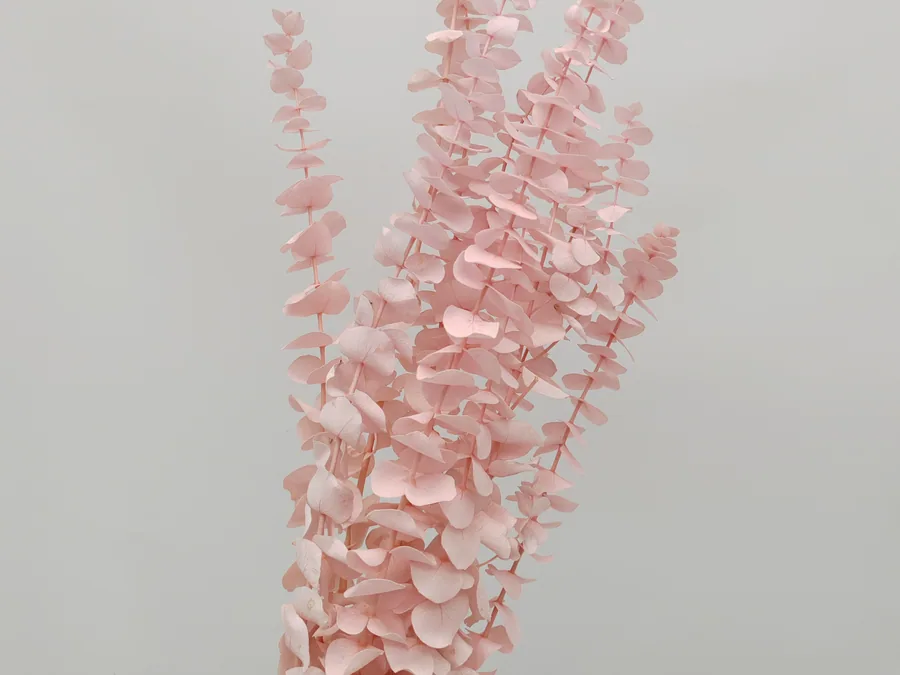
Roses with stems
The same flower left on the stem, for arranging rather than setting.
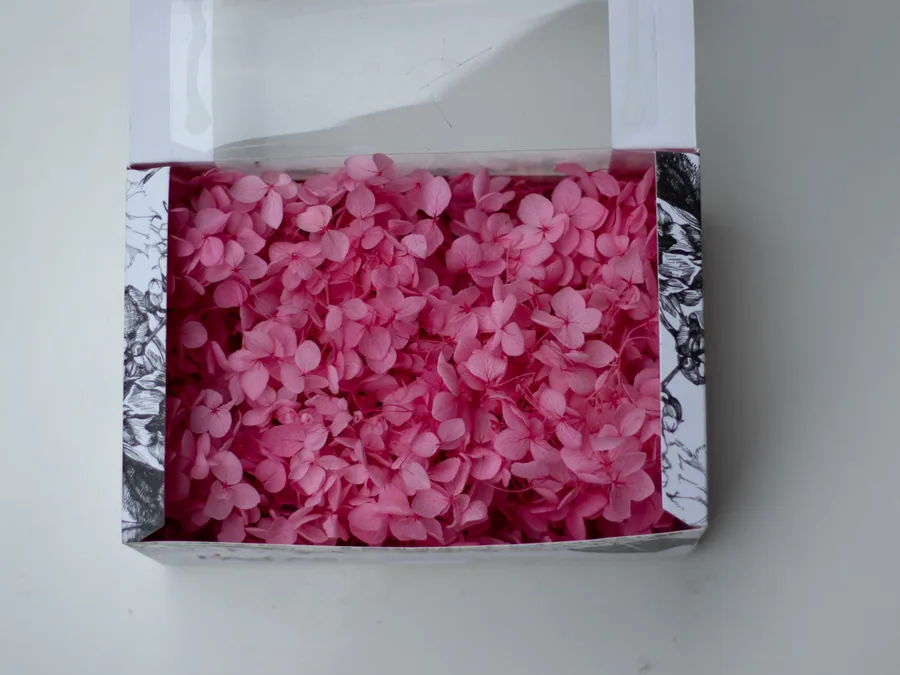
Preserved hydrangea
The volume flower that sits under the rose heads in a packed box.
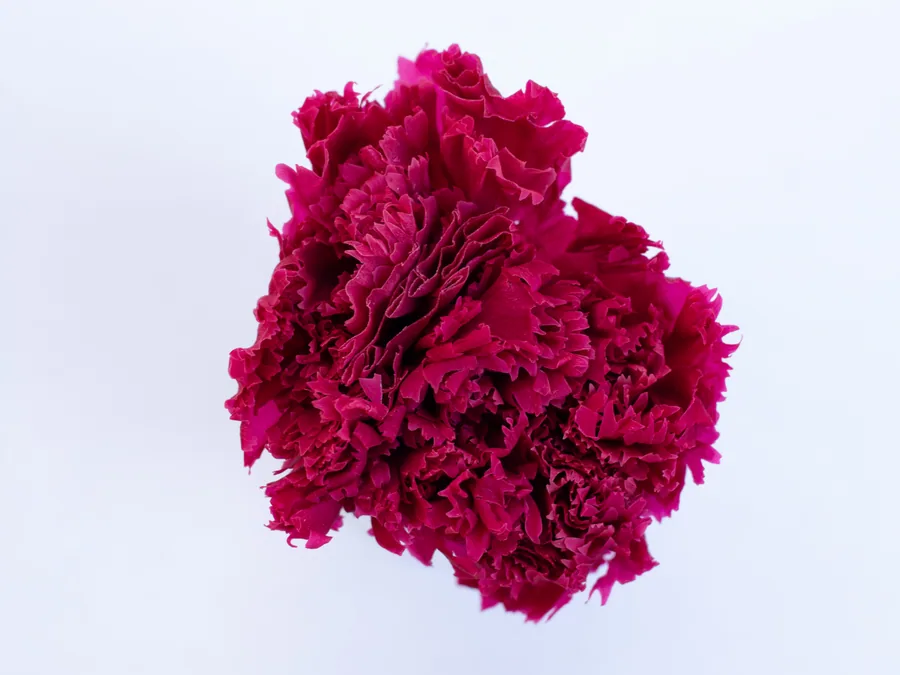
Fillers & accent flowers
The second scale that stops a box reading as a row of roses.
- How to choose preserved flower grades for wholesale →
- MOQ and shipping terms for preserved flowers from China →
- Browse the full material range →
The size band settles the diameter, not which grade each part of a piece needs. The wedding guide to stem length and component grades works that through item by item.
Next step
Send the piece you are making — we will price the heads for it
Tell us the finished piece, the size band you think it needs and your destination. You get the specification, the packing count, chargeable weight and shipping options, usually within one business day.